CNIR group
Latest News
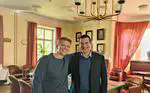
We are excited to share that Joonas Laurinoja has been awarded personal funding of 34,000 € from the Emil Aaltonen Foundation.
This prestigious funding will support Joonas’ ongoing research on the development of a multi-modal imaging-guided brain stimulation system. The project aims to advance precision and effectiveness in brain stimulation technologies, contributing to both scientific understanding and potential future clinical applications.
We are grateful to the Emil Aaltonen Foundation for their recognition and support of this important research, and we look forward to the progress this funding will enable.

Simona had the pleasure of participating in the 11th Science Factory: TMS–EEG Summer School and Workshop, organized by Aalto University’s Department of Neuroscience and Biomedical Engineering. The fast paced-event brought together researchers from around the world to exchange ideas, dive into hands-on TMS–EEG sessions, and explore new directions in brain stimulation research.
The school is an incredible opportunity to build deep and actionable knowledge in TMS–EEG from the ground up, thanks to expert mentoring and an incredibly engaging atmosphere. Ready to apply this knowledge to our own research!
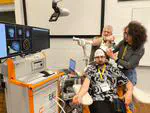
We are pleased to share that our team will participate in the 6th Brain Stimulation Conference in Kobe, Japan.
One of works presented here is a poster presentation of Joonas Laurinoja’s latest work exploring the reproducibility of TMS-evoked potentials (TEPs) inside the MRI scanner. Building on last year’s closed-loop TMS-EEG studies conducted during concurrent fMRI, this project has focused on testing and validating the feasibility of measuring reliable TEPs in such a challenging environment.
A great deal of effort has gone into designing and running these experiments, as well as analyzing the complex data they produce. We are excited that the results are now ready to be shared with the international brain stimulation community in Kobe.
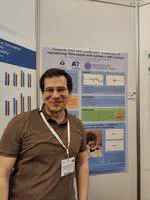
Thrilled to share that Simona Leserri has received a research grant from the Instrumentarium Foundation! This funding supports her work on personalizing TMS treatments for major depressive disorder. By leveraging diffusion MRI to map individual brain connectivity, we aim to understand why TMS works for some but not others — and how to make it more effective for all.
Grateful to Instrumentarium Foundation for believing in this vision and looking forward to the discoveries ahead!
We are excited to announce that our new project on AI-driven brain stimulation for treating depression has received funding from the Technology Industries of Finland Centennial Foundation through the Future Makers programme.
This initiative perfectly complements our ongoing efforts in the Research Council of Finland-funded GUIDE-IN-TMS project. By integrating advanced AI-based diagnostic tools, the new project will enable us to significantly enhance our approach to personalized brain stimulation.
We are deeply grateful to the foundation for the generous €300,000 funding. Over the next three years, this support will allow us to advance the technology to a clinical trial-ready stage, bringing us closer to transforming depression treatment.
For more details about the awarded grants in this call, please visit this link.
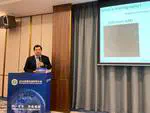
Dr. Aydogan delivered an invited talk at the prestigious 2024 World Life Sciences Conference in Boao, China. The presentation focused on the cutting-edge topics on tractography and connectivity-based brain stimulation. This remarkable event, themed “One World, One Health,” brought together leading researchers and thought leaders from around the globe, including keynotes by four Nobel Laureates. A highlight of the trip was reconnecting with colleagues and friends.
Research
Recent projects
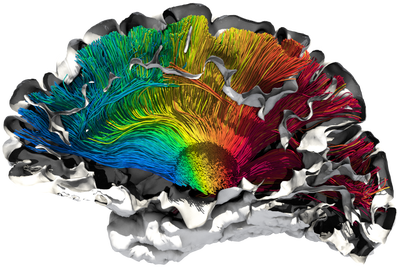
Funded by the Technology Industries of Finland Centennial Foundation, this Future Makers project is developing AI-based brain stimulation as a therapy for hard-to-treat depression. It is an example of a theranostic-like system that integrates diagnostics with therapy. Using AI, we are integrating tractography into our novel closed-loop TMS-EEG-MRI system allowing the treatment to be personalized to the individual needs of each patient.
In our Academy of Finland funded (#348631, #353798), GUIDE-IN-TMS project , we are developing an MRI-guided major depression disorder treatment planning method using individualized, network-targeted TMS. To achieve this we are building a novel system that we named the "dual-closed-loop TMS-EEG-MRI", where we adjust TMS parameters using feedback from both EEG and fMRI in (near) real time.
In this project, we developed a real-time tractography-assisted TMS neuronavigation system. Key features include the application of state-of-the-art tractography practices, the ability to tune tractography parameters on the fly, and the display of thousands of new streamlines every few seconds using a novel uncertainty visualization technique. Click the video for a demonstration of our system. A preprint can be accessed from here.
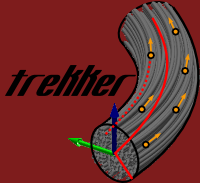
Trekker is an open-source fiber-tracking software that is used by many research groups around the world. It estimates structural connections in the brain using diffusion MRI data using the parallel transport tractography (PTT) algorithm. We used Trekker and won awards in all the international tractography competitions organized since 2017. In 2021 MICCAI CDMRI tractography challenge, all the top three teams used Trekker.